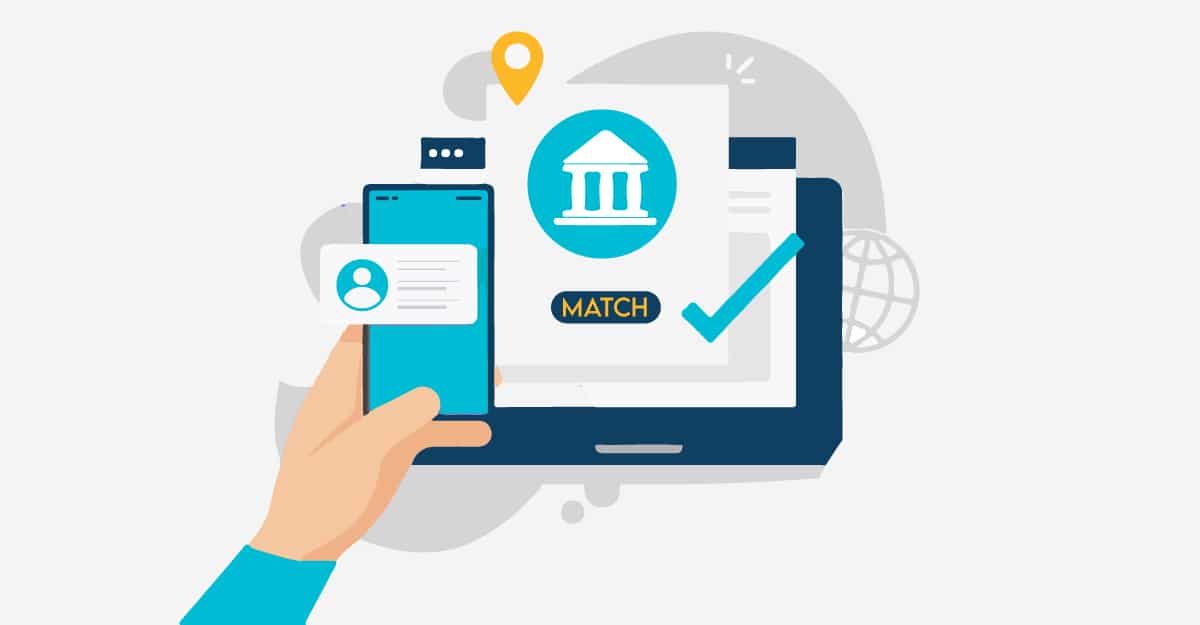
What is address proof and why is it crucial? What kind of typical problems do fintech companies have with documentation proving their addresses?
Applications for new accounts, loans, mortgages, credit cards, and other things frequently call for customer ID verification along with the proof of address. Verifying proof of address is crucial for the KYC process and for lowering the incidence of financial fraud. A person’s address is crucial for confirming their identity during ID verification.
Financial organizations are able to serve a certain geographic area by using utility bill verification as evidence of address, which is not merely used to confirm a customer’s identification. Banks and other financial institutions can reduce fraud and avoid fines for failing to follow KYC regulations. For instance, social networks and neighborhood apps limit user access to residents only in order to prevent fraud.
Proof of address verification used to be a time-consuming process that delivered a bad customer experience, and fraudsters with advanced technology could easily trick the manual process until digitalization became widely adopted in the sector. Relying on manual checks for proof of address verification raises the possibility of human error, adds needless friction, and causes delays for the consumer.
Customers must locate, scan, and provide the necessary number of pages of documents in the acceptable format for the proof of address verification process. Poor customer experience occurs as a result of the procedure, which should be immediate, taking days or even weeks to complete. Because there are so many papers that might be used as proof of address verifications and because each document review standard has its own set of problems, there are many potential failure sites. Banks and other financial institutions must come up with stronger procedures now that instant online proof of address document verification technology is available.
What is Address Proof?
Proof of address, as the name suggests, is a document that certifies a person’s residence. The true address and the address listed on the document must match. Customers who live in high-risk areas typically face a high level of inspection. Certain financial services are only offered to customers in a specified zone. For instance, bitcoin exchanges in Europe might decide not to accept American clients in order to evade SEC penalties for transacting in unregistered securities.
Regulations may impose such limitations, or a business may have implemented its own rules. Organizations can deliver services online and adhere to internal and regulatory standards by verifying residential information with proof of address documents.
There are several ways to show where something is located, such as with a letter of proof of residency (Affidavit of Residence), but the most popular method is to show documents with the location, the date they were issued, and the name of the recipient. Each organization is free to establish its own policies on which documents it accepts and which it rejects as evidence of residence.
Among the most widely recognized documents are:
Utility costs
Banking Statement Tax Bill
Statement for a credit card
Agreement of Tenant
Workplace letter
Typical Problems with Address Proof of Documents
The process for verifying proof of address hasn’t altered much, despite ongoing technological advancement. The following are some of the greatest issues with proof of address documents:
A variety of document templates
The issue of determining the authenticity of the document becomes a significant obstacle in determining the documents’ validity because there are hundreds of services that can offer a client proof of address documents and add numerous document styles, formats, and types of information. There may be hundreds of acceptable documents with little to no similarities depending on the use case. Verifying various documents for banks becomes exceedingly difficult.
Customer Experience is Subpar
A customer cannot ignore the time spent validating the documents and opening the account. The majority of individuals don’t have the time to locate the documents, scan them, and then wait several days to determine whether the document is acceptable. Consumers demand immediate solutions. A survey found that 50% of client applications are abandoned after being asked for identification documents as confirmation of identity.
The absence of clear rules and regulations in the financial services sector causes customers to find the procedure complex. Also, as consumers become more accustomed to digital technologies, it doesn’t seem like it would be worth the trouble to provide a physical document given the danger and friction involved. Customers’ scanned documents can contain even the smallest mistakes, which can result in failure and a worsened customer experience.
Document handling costs
In addition to the aforementioned difficulties, it can be expensive to submit physical papers for manual verification. It’s simple to approve a few applications each month, but the system struggles when faced with thousands of applications. Also, banks must keep track of transactions and safeguard document data, which raises the entire cost.
Technological Integration into Proof of Address Verification
One of the best things about technology is its ability to automate even the most repetitive and monotonous chores when used properly. Banks can speed up onboarding, automate address verification, and contribute to better compliance and fraud protection results by successfully integrating technologies into the proof of address verification process. You need a combination of many technologies to address every aspect of the address verification process, just like with other ID verification methods.
While attempting to improve the proof of address verification process, online document verification or online proof of address verification technology should be the first and foremost option. Businesses can improve their verification procedures, customer onboarding procedures, and document fraud and forgery detection by utilizing online proof of address verification software from DIRO.