Cosmic Dust: A New Key to Understanding Arctic Climate Change
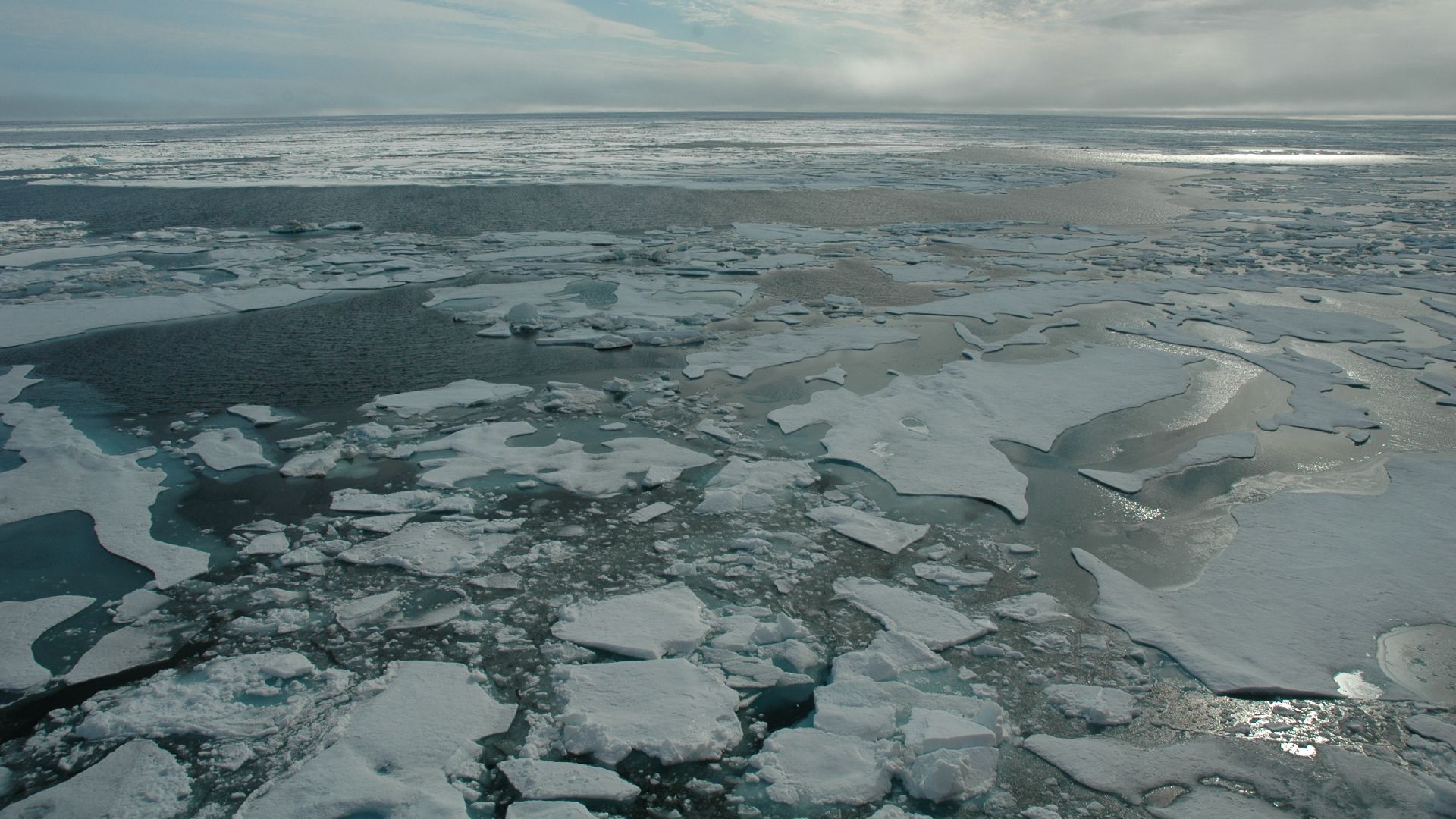
The Arctic is in trouble. Climate scientists are grappling with increasingly alarming data, showing that sea ice in the Arctic Ocean has shrunk by over 42% since satellite monitoring began in 1979. With temperatures rising faster in this remote region than in any other part of the world, the urgency to understand what this means for the future has never been greater. But a recent study has introduced a fascinating twist in this narrative: cosmic dust.
The Urgency of Understanding Sea Ice Decline
The stakes are high. The diminishing sea ice in the Arctic isn’t just a loss of frozen water; it’s a harbinger of rising sea levels and a shift in global ecosystems. Imagine a world where the Arctic Ocean is ice-free during summer months—a terrifying scenario that could become a reality in just a few decades. As the ice melts, it triggers changes in food webs, impacts wildlife habitats, and raises geopolitical concerns over newfound access to resources.
Frankie Pavia, a climatologist at the University of Washington, sums it up well: “If we can project the timing and spatial patterns of ice coverage decline in the future, it will help us understand warming, predict changes to food webs and fishing, and prepare for geopolitical shifts.” This kind of knowledge is vital, not just for scientists and policymakers, but for everyday people who rely on stable ecosystems.
The Challenge of Predictions
Until now, predicting how Arctic sea ice will change has been like trying to read a book with pages missing. Without historical records showing how the ice responded to past climate changes, making future predictions has been a guessing game. What if there was a way to look back through time and see how ice coverage correlated with temperature shifts? Enter the cosmic dust from space.
Yes, you read that right. Every day, our planet gets a sprinkle of interplanetary dust, and some scientists are tapping into this unique resource to unravel the mysteries of the past.
Cosmic Dust: The Key to Unlocking History
So, how does cosmic dust help? When the Arctic Ocean is frozen, this dust can’t settle on the sea floor. But when the ice recedes, more of it can. Pavia and his team took sedimentary cores from three different locations in the Arctic Ocean, seeking out layers rich in isotopes like helium-3 and thorium-230. Each of these isotopes has a specific origin: helium-3 comes from cosmic dust, while thorium-230 is a decay product of uranium found in the ocean.
The research team found that during periods of high ice abundance, the ratio of thorium-230 to helium-3 was higher than during periods of low ice cover. Imagine looking for a needle in a haystack; that’s how Pavia described the challenge of sifting through vast amounts of sediment. Yet the effort was worth it—what they uncovered wasn’t just a record of dust; it was a historical timeline that linked ice coverage, climate conditions, and nutrient availability in the ocean.
What the Findings Reveal
The sediment cores revealed profound insights into how Arctic sea ice has been shifting over thousands of years. For instance, during the last ice age, which began about 20,000 years ago, the cores showed almost no cosmic dust settled at the ocean’s bottom due to extensive ice cover. Fast-forward to 15,000 years ago, when the ice began to melt, and the evidence of cosmic dust spiked.
What’s particularly intriguing about Pavia’s findings is the revelation that the amount of sea ice isn’t solely governed by ocean temperatures, as previously thought. Instead, atmospheric temperatures play a critical role. This change in understanding is vital; if the atmosphere drives ice loss more quickly than the ocean can adjust, we might face an accelerated decline in sea ice far sooner than anticipated.
Nutrients and the Food Web
The study didn’t stop there. It also explored how sea ice influences the ocean’s nutrient balance. As the ice decreased, the cores showed that tiny organisms called phytoplankton were consuming nutrients more quickly, likely affecting the entire food web. Pavia warns, “As ice decreases in the future, we expect to see increased consumption of nutrients by phytoplankton in the Arctic, which has consequences for the food web.”
This means that diminishing ice could have cascading impacts not just in the Arctic but globally, disrupting the delicate balance of ocean ecosystems. It leaves us with questions about sustainability and the future of marine life. Will the Arctic’s productivity last, or could we face ecosystem collapse?
The Complicated Relationship Between Ice and Nutrients
Still, there are many questions left unanswered. One avenue for exploration is why nutrient availability fluctuates alongside sea ice presence. With less ice, more room becomes available for photosynthesizing algae, but there’s also the risk of nutrient dilution as melting ice enters the ocean. There’s a complex interplay between these two processes that needs further investigation.
Why This Matters
This research, published in the journal Science, provides critical insights that could redefine our understanding of climate change and its implications. But beyond the scientific implications, it makes the issue personal. We often think of climate change as an abstract, distant threat, yet its consequences will touch everyone—residents of coastal towns, fishermen, and even kids who just want to enjoy a day at the beach.
Imagine if we could equip communities to prepare for the shifting tides, not just in terms of sea levels but also in understanding how this loss of ice can impact fishing seasons or migration patterns of marine life. It’s essential that we translate these findings into practical applications for those affected.
A Call to Action
As we stand at this critical crossroads, what can we do? Awareness is the first step. Understanding the science of climate change, and the specific ways it affects our planet, turns fear into action. Whether involving yourself in community discussions or advocating for sustainable practices, every effort counts.
The urgency surrounding the decline of Arctic sea ice is more than just a scientific issue; it’s a human one. As we reflect on these findings, let’s remember that the ice, the dust, and the delicate balance of life they support are worth fighting for. Perhaps it’s time we listen—really listen—to what the earth is telling us through its ever-changing landscape. After all, the fate of many ecosystems may depend on the actions we take today.
Embracing the lessons that science teaches us can steer us toward a more sustainable future. What will you do with this knowledge?

Leave a Reply