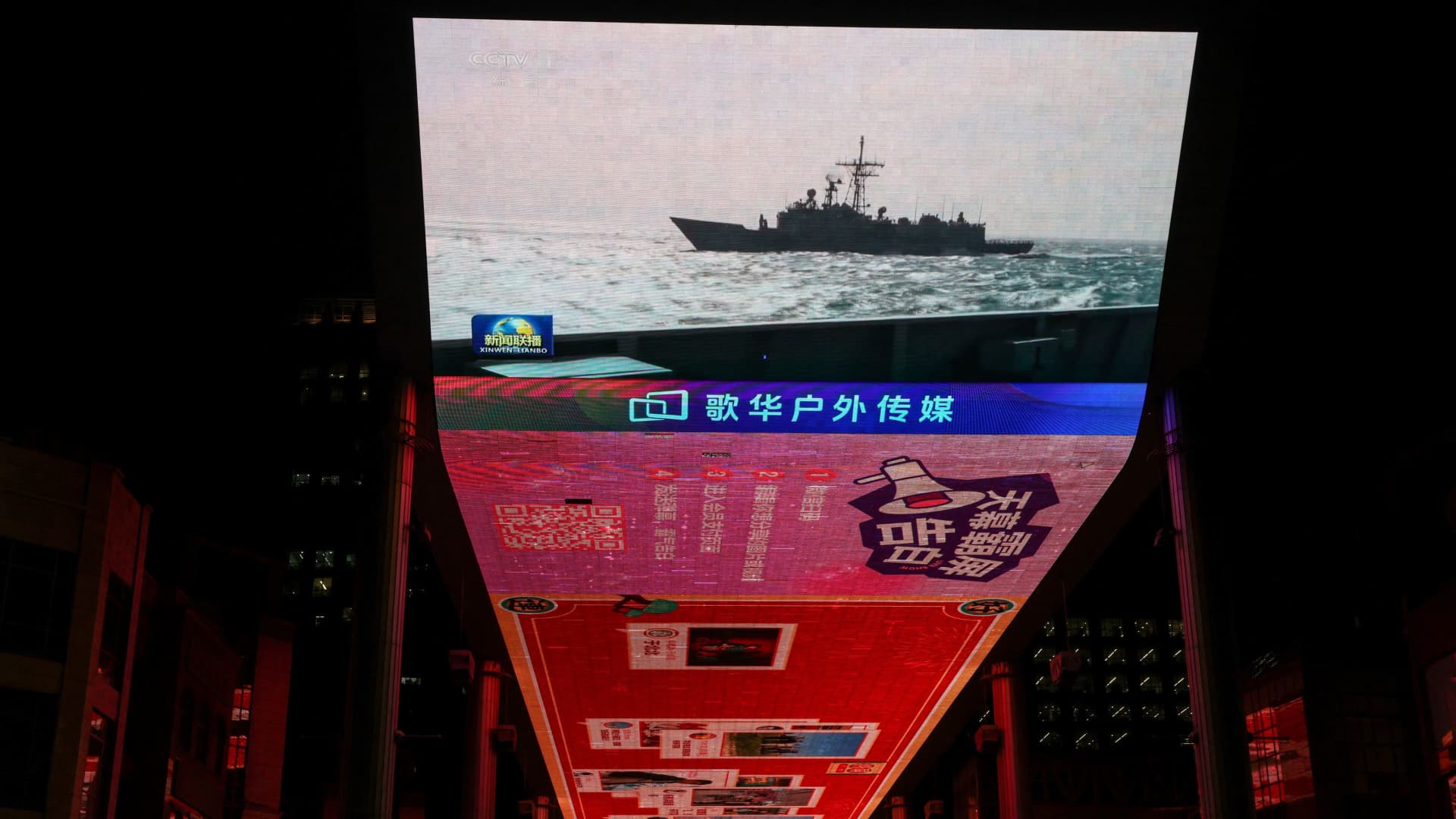
The U.S.-Taiwan Trade Deal: A Double-Edged Sword
Just last week, a significant trade agreement between Taiwan and the U.S. set off alarm bells in Beijing. The pact, aimed at boosting the Taiwanese economy, promises to cut tariffs on Taiwanese exports to the U.S. down to 15%. In return, Taiwan has pledged a staggering $250 billion in investments in the U.S., particularly in technology sectors like chips and artificial intelligence. This new level of cooperation has sparked a wave of criticism from China, highlighting the growing tensions in the region.
The Roots of Discontent: China’s Response
China’s discontent with this new trade agreement is palpable. Peng Qingen, a spokesperson from China’s Taiwan Affairs Office, made it clear that Beijing sees the deal as a threat. He stated that it would “only drain Taiwan’s economic interests,” positioning the U.S. as a greedy benefactor at Taiwan’s expense. He accused Taiwan’s ruling party, the Democratic Progressive Party (DPP), of allowing foreign powers to “hollow out” the island’s crucial industries.
But what does this all really mean? For everyday people in Taiwan, it raises concerns about job security and local manufacturing. Many worry that while the U.S. benefits from cheaper electronics, Taiwan could lose its industrial base. There’s a history to this; the fear of being sidelined by larger powers isn’t new for the island.
A Strategic Alliance: Why This Matters
The trade deal aims to strengthen Taiwan’s position in the global semiconductor market. These chips aren’t just tiny pieces of silicon; they’re at the heart of modern technology, powering everything from smartphones to cars. Taiwan Semiconductor Manufacturing Company (TSMC), the world’s largest chipmaker, has committed to investing $165 billion to expand its operations in the U.S., potentially building additional facilities there. This move is not just a business decision; it’s a strategic one.
Yet, as Secretary of Commerce Howard Lutnick recently stated, the goal is to bring 40% of Taiwan’s semiconductor supply chain to the U.S. This shouldn’t be taken lightly; Taiwan currently meets nearly one-third of the global demand for advanced computing power. If the U.S. can establish more of this supply chain domestically, it would reduce its reliance on Taiwan—potentially altering the island’s economic landscape forever.
The Pain of Economic Dependence
Economically, it’s a double-edged sword. On one hand, the new investment opportunities could create jobs in sectors that many Taiwan residents depend on. But will those jobs remain in Taiwan? As the focus shifts towards providing for the American market, there’s a legitimate worry that the island’s own industries might struggle to thrive.
When I think about this, I can’t help but remember the stories of local manufacturers from my hometown, afraid of being swallowed by larger corporations. It’s a fear that many communities face globally, and Taiwan is no exception.
U.S. Strategy: Containing China
The implications extend far beyond trade. For the U.S., strengthening ties with Taiwan is part of a broader strategy to contain China. While China asserts that Taiwan is part of its territory, the U.S. has been ramping up its support for Taiwanese independence, both military and economically.
As tensions escalate, the stakes grow even higher. Beijing has accused Washington of using Taiwan as a pawn to “contain China,” which adds another layer of complexity. It’s a geopolitical chess game where each move could trigger unexpected consequences.
What’s Next for Taiwan?
Taiwanese officials, however, don’t seem fazed. Vice Premier Cheng Li-chiun responded to concerns by emphasizing that the U.S. goal of achieving 40% chip self-sufficiency doesn’t rely solely on Taiwan. In fact, it involves collaborations with American chip makers and possibly other countries too.
This diversification could benefit Taiwan if it maintains control over its most advanced technologies. The island already plays a pivotal role in the global semiconductor supply chain, which may protect it from external forces seeking to undermine its independence.
Nonetheless, experts argue the deal won’t fully eliminate Taiwan’s role in supplying advanced chips anytime soon. Taipei has steadfastly held onto its policy of keeping cutting-edge technology within its borders. If Taiwan can effectively balance its obligations to the U.S. while protecting its industries, it may just navigate this tumultuous sea successfully.
Personal Reflections
As we continue to watch events unfold, it’s hard not to reflect on the human cost of these geopolitical dramas. The lives of everyday Taiwanese citizens could significantly be impacted as their government grapples with these monumental decisions. This trade deal is much more than a political maneuver; it’s about the livelihoods of people who rely on stable jobs, local manufacturers, and an economy that sustains their communities.
What this story ultimately highlights is a common theme: the struggle between economic growth and national identity. Taiwan stands at a crossroads, with monumental choices ahead. Its course will not only affect the island itself but may also reshape how smaller nations can navigate the tug-of-war between larger powers like the U.S. and China.
In the end, this trade deal presents both opportunities and perils. It’s a microcosm of a world grappling with complex, interwoven relationships. As we see Taiwan embrace this bold partnership with the U.S., we must ask ourselves, what does this mean for everyday people? How will they adapt as these dynamic forces unfold on the global stage?
The answers are still being written, and the coming months will be crucial in determining Taiwan’s fate. We should keep a close eye on how this plays out, as the repercussions will resonate beyond borders and affect countless lives.

Leave a Reply