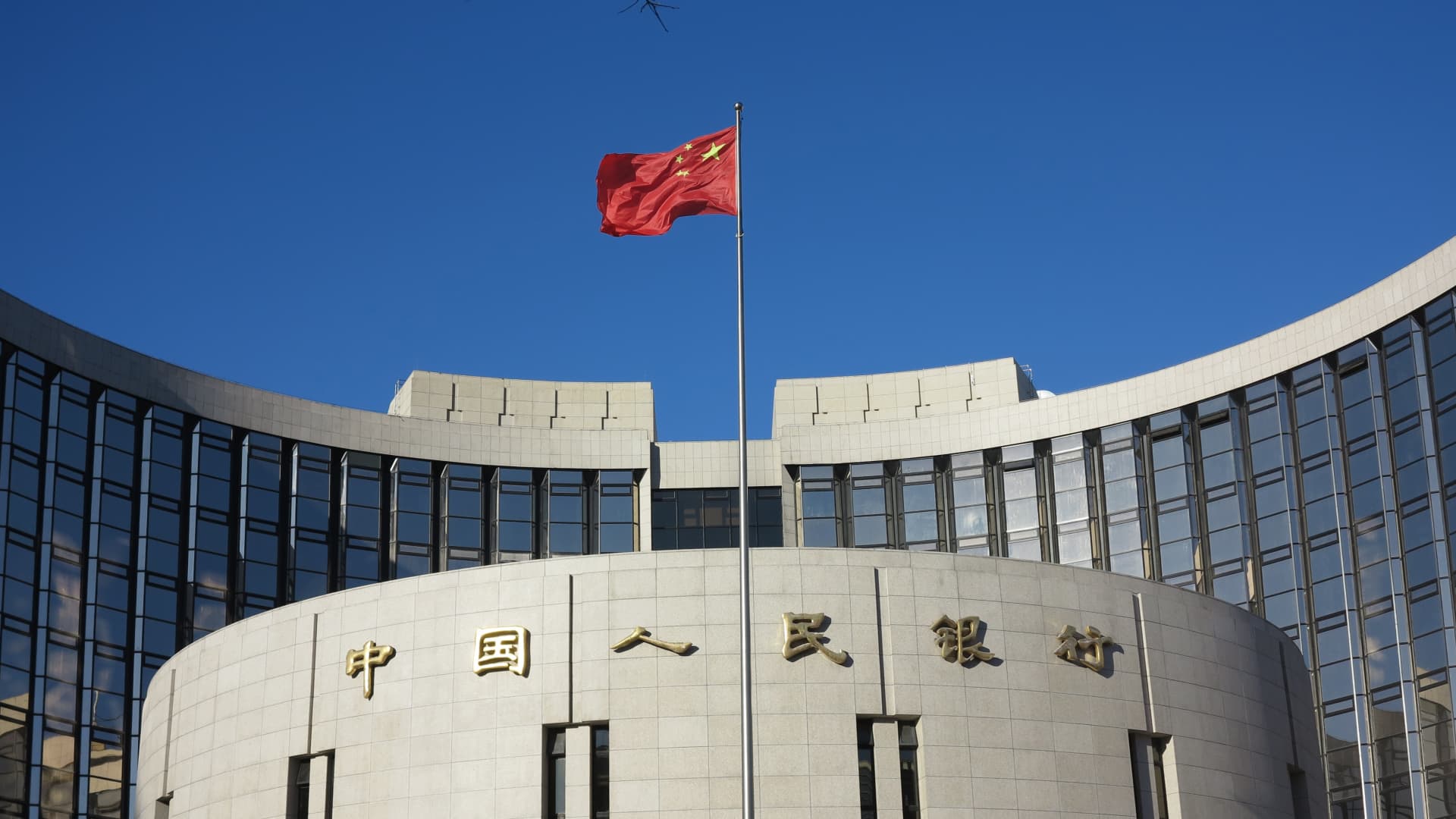
China Holds Interest Rates Steady as Economic Slowdown Worsens
As the sun sets over Beijing, a cloud of uncertainty hangs over China’s economy. On January 6, 2025, the People’s Bank of China (PBOC) made a pivotal decision, choosing to keep its loan prime rates unchanged for the eighth consecutive month. This move has stirred conversations among economists, policymakers, and everyday citizens alike: what does it mean for China’s already struggling economy?
Why Interest Rates Matter
The PBOC’s decision to maintain the 1-year and 5-year loan prime rates at 3% and 3.5%, respectively, holds significant implications for various sectors of the economy. The 1-year rate primarily influences most new and outstanding loans, while the 5-year benchmark plays a key role in determining mortgage rates. With both rates untouched, it’s clear that the central bank is opting for a targeted approach to stimulate the economy rather than broad-based changes.
This comes against the backdrop of a slowing economy, which grew by 4.5% year-on-year in the last quarter of 2025—the slowest pace since the country reopened from the stringent COVID-19 lockdown measures. It’s a sobering reminder that recovery can be tricky.
Understanding the Economic Landscape
Diving into the numbers reveals a deeper story. The nominal GDP has lingered below 4% for three years, hitting 3.8% in the final quarter of 2025, the lowest figure in half a century, excluding the pandemic year of 2020. This stagnation isn’t just a statistic; it represents real struggles for businesses and consumers alike.
Imagine walking through your neighborhood and seeing storefronts closing down, workers facing layoffs, and families tightening their belts. This isn’t just a narrative; it’s a reality for many in China. The GDP deflator, which measures price changes, has been negative for 11 consecutive quarters. This kind of sustained deflation chips away at consumer confidence and spending, leading to less robust economic growth.
Retail Sales at an All-Time Low
To make matters worse, retail sales growth plummeted to a three-year low of 0.9% in December. Households are grappling with the fallout of a prolonged housing crisis, a stagnant job market, and entrenched deflation. For many families, the struggle to make ends meet seems never-ending.
A press conference by China’s state planner highlighted the urgency of the situation. They assured the public that more proactive fiscal policies and moderately loose monetary policies are on the table to stimulate prices and, by extension, consumer confidence.
Focus on Targeted Solutions
While the PBOC has opted not to cut interest rates broadly, they are not sitting idle. Last week, they lowered interest rates on structural monetary policy tools, reducing the 1-year rate on relending facilities designed for agricultural and small businesses to 1.25%. It’s a step aimed at easing access to credit specifically for those sectors facing the most pressure.
This means the PBOC is leaning heavily on focused measures. They plan to create a dedicated relending program for private enterprises and increase quotas for loans designed for tech innovation and support for small and medium-sized companies. For prospective home buyers, the minimum down payment for commercial property mortgages will be lowered to 30%, an effort to reduce housing inventory and stimulate the sluggish real estate market.
As we consider these targeted actions, it’s easy to wonder: could these efforts be enough to reignite consumer confidence? When will the average citizen feel the ripple effect of these financial strategies?
Challenges Still Looming
Despite these measures, the numbers paint a challenging picture. New bank loans hit a staggering low of 16.27 trillion yuan ($2.33 trillion) in 2025, a clear signal that borrowing demand has stalled. This disparity puts additional pressure on the government to roll out substantial stimulus measures.
In a recent note, economists at Nomura expressed growing concern about one of the worst domestic demand slowdowns seen this century. It begs the question: how long can the government sustain this level of intervention without risking deeper economic troubles?
What Lies Ahead?
Speaking at a press briefing, Deputy Governor Zou Lan informed reporters that there’s still room for further adjustments to both reserve requirement ratios and policy rates. This statement signals that while the bank is exercising caution, they are not entirely dismissing the possibility of future rate cuts.
There’s also optimism about the yuan’s performance, which recently appreciated against the dollar. This may offer some breathing room for the PBOC to consider future cuts without fearing an adverse impact on currency stability.
Goldman Sachs views the landscape similarly, predicting that the PBOC will likely lower the reserve requirement ratio by 50 basis points and the policy rate by 10 basis points in the first quarter. These adjustments could be pivotal as the government navigates the turbulent waters of an uncertain economic environment.
Manufacturing Stays Strong Amid Risks
Interestingly, while consumer spending may be faltering, China’s manufacturing sector continues to hold its ground. Industrial production rose by 5.9% throughout 2025, and exports climbed by 5.5%, culminating in a record trade surplus of nearly $1.2 trillion. Yet, this positive growth contrasts sharply with the domestic challenges facing many consumers and smaller businesses.
Fixed-asset investment in urban areas suffered a decline of 3.8% last year, largely due to a significant downturn in property investment. This trend reflects Beijing’s efforts to curb local debt risks while trying to balance growth and stability in several sectors.
A Reality Check
The juxtaposition of strong manufacturing and weak consumer confidence raises a critical question: is the Chinese economy simply two sides of the same coin? Can it truly recover if consumer spending remains sluggish? I still remember when my own city faced economic uncertainties, and the effects were visible in the small businesses that struggled to survive.
The Road Ahead
The PBOC’s choice to maintain interest rates underlines the delicate balancing act that China’s leaders are performing. They’re aware that any misstep might send shockwaves through both domestic and global markets.
As we sit back and await the government’s next steps, we’re left with a greater understanding of how intertwined economics, consumer sentiment, and policy decisions are. For the citizens of China, these decisions echo in their daily lives, impacting everything from job security to the prices they pay at the grocery store.
Understanding these dynamics is crucial, not just for policymakers but for everyone affected by these broad economic currents. It’s a reminder that economics isn’t just numbers and charts; it’s about real lives and real choices.
In the end, China stands at a crucial crossroads. The effectiveness of targeted policies will determine not only the future of its economy but also how quickly it can recover from this downturn. It’s a moment of reflection for many, reminding us that sometimes the best strategies come not from sweeping changes but from careful, calculated adjustments focused on the areas that need it most.
As we watch how this unfolds, we may just find lessons that resonate beyond China’s borders, offering insights into our own economies and futures. What steps will they take next? Only time will tell.

Leave a Reply