
What Maduro’s Capture Means for the Global Oil Market
Early Saturday morning, a seismic shift echoed through the oil markets as news broke that the U.S. military had captured Nicolás Maduro, Venezuela’s controversial president, along with his wife, Cilia Flores, during a dramatic raid in Caracas. This audacious move, reminiscent of a high-stakes political thriller, leaves everyone questioning: How will this shake-up affect the global oil landscape?
A New Dawn for Venezuela?
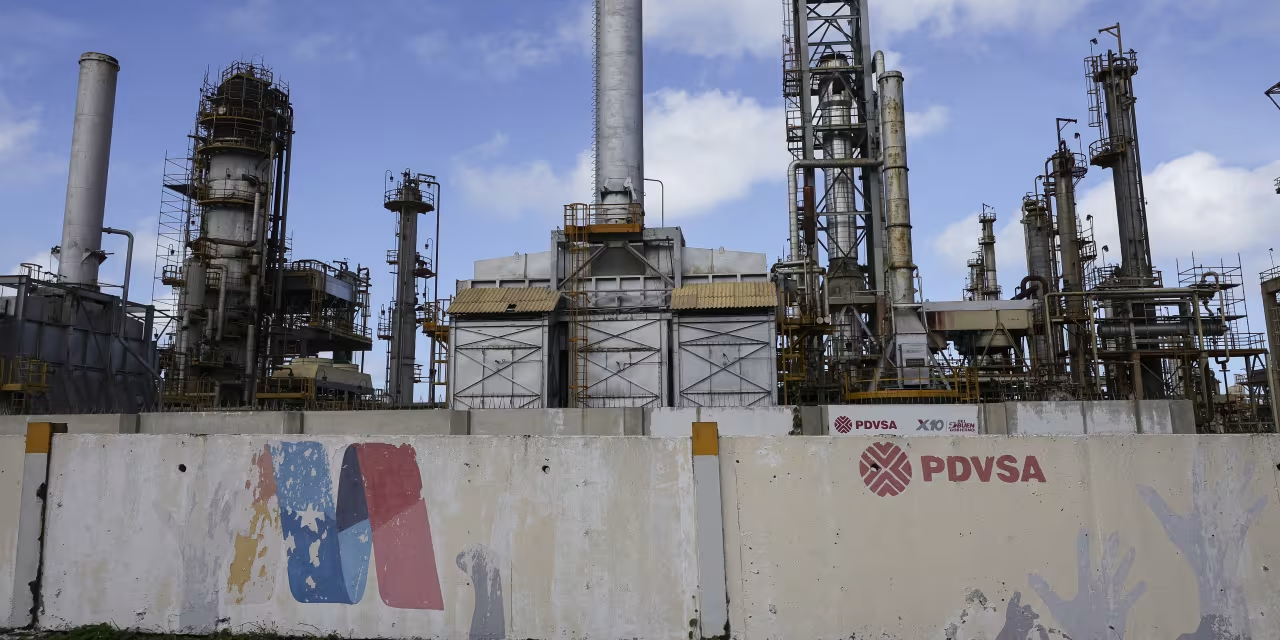
For years, Venezuela has been sitting on one of the largest oil reserves in the world, yet its fortunes have dwindled under Maduro’s leadership. With mismanagement and corruption gripping the country, oil production plummeted to historic lows, impacting not just the Venezuelan economy but also the global oil supply. Some estimates suggest production has plummeted from about 3 million barrels a day in 2010 to less than a million now—a staggering decline for a nation once known as a powerhouse in the OPEC oil cartel.
So, with Maduro out of the picture, does this mean Venezuela can finally get back on its feet? Industry experts speculate that a new government could reinvigorate the country’s production capabilities, assuming a transition toward more stable leadership occurs. But even the most optimistic predictions don’t suggest an overnight revival. Turning this massive oil vessel around will require not just time but considerable investment, expertise, and international support.
The Immediate Market Reaction: Upward Trends
As one might expect, news of Maduro’s capture sent ripples through global oil markets. On Monday morning, oil prices surged. Brent crude oil rose by nearly 4%, pushing past the $90 per barrel mark. Investors are excited, but should they be cautious as well?
Jared Myers, a senior analyst at Global Energy Insights, mentioned, “This kind of geopolitical shakeup often sparks hope for increased production in countries like Venezuela. But we’ve seen this story before—optimism often meets a hard reality check.”
The fluctuating prices following the raid highlight how interconnected global economies truly are. What does this mean for everyday consumers? Those frequent trips for gas might become a little pricier, depending on how quickly the market adjusts to the new reality.
What Lies Ahead for Venezuelan Oil?
Venezuela’s oil is of low quality—known as “heavy crude”— demanding expensive processing to refine it into usable fuels. However, if a new administration emerges that can stabilize the economy and restore confidence both domestically and internationally, the upside potential is significant. If the country’s infrastructure can be upgraded and investors can be enticed, we could see production ramping up, which might help ease the current tightness in the oil market.
But let’s not forget the history here. Many Venezuelans still remember when the country was once a beacon of economic prosperity, thriving on its oil wealth. The political turmoil hasn’t just decimated the economy but also increased hunger, the healthcare crisis, and mass emigration. A new regime could tackle these issues, but trust won’t be rebuilt overnight, and international investors may remain reluctant until there are clear and stable signals.
Global Oil Dynamics: More Than Just Venezuela
While Venezuela’s situation is crucial, the global oil dynamics are also influenced by other factors. Oil prices are always sensitive to major geopolitical developments, including tensions in the Middle East, fluctuations in U.S. shale production, and OPEC’s decisions regarding supply.
For instance, the ongoing conflict in Ukraine still adds considerable pressure to the energy markets as sanctions on Russian oil create significant shifts. The world is attempting to adjust, leading to price volatility that often feels like a rollercoaster ride. And with diminishing supplies from several sources, every new development, like Maduro’s capture, becomes a point of speculation for traders and consumers alike.
The Local Angle: What Does This Mean for Consumers?
So, how does this impact people at home? The price tag at the gas pump could fluctuate as markets react to this news and as prices ripple through the supply chain. If production from Venezuela picks up effectively, we may benefit from more stable prices in the long run.
What about the ongoing conversation on renewable energy? While the traditional oil market is crucial for consumers today, many are also pondering the accelerating transition to greener technologies. Some experts believe that if nations prioritize energy diversity, being reliant on one country’s oil might not be as pressing a concern.
Emotional Stakes: Lives and Livelihoods
As we watch these developments unfold, let’s not forget the human aspect of this story. For decades, Venezuelans have suffered under economic turmoil, driven to leave their home country for better lives abroad. Families have been torn apart; dreams shattered. Now, with change seemingly within reach, there’s a flicker of hope that a new direction could mean restoration for everyday life in Venezuela.
Reflecting on this makes one wonder: How much longer can people endure waiting for their government to prioritize their well-being? It’s a question that resonates deeply and adds an emotional layer to the cold mechanics of the global oil market.
Lessons Learned: Analyzing What Lies Ahead
As we absorb the implications of Maduro’s capture, it’s clear that this situation extends beyond oil prices and supply lines. It’s about politics, about rebuilding lives, and about what it means to stabilize not just a country’s energy resource but the very fabric of its society.
In essence, the story serves as a stark reminder: The geopolitical landscape can shift overnight, and while hope is a powerful motivator for change, the path to recovery often remains fraught with challenges.
What does this mean for residents worldwide? It emphasizes the fine line between political power and economic stability. The world is watching—and learning. Whether Venezuelans will reclaim their pride in their nation’s resources depends not only on internal reforms but also on how the international community chooses to engage with this new Venezuela.
So, as we continue to follow this story, let’s keep our eyes open—not just for the numbers rising or falling on the news ticker, but for the stories of people behind them, the ones holding their breath, waiting for a better tomorrow.