

Google’s “Personal Intelligence”: A Game-Changer in the AI Race
The world of artificial intelligence (AI) is buzzing with anticipation and intrigue following Google’s rollout of “Personal Intelligence” on January 14, 2026. No longer just another chatbot or productivity tool, this innovative feature signals a significant evolution in how we engage with our digital assistants. By transforming the Gemini AI from a mere repository of knowledge into a true personal aide, Google is turning the tables in the tech industry, aiming to challenge Microsoft’s long-standing dominance in productivity software.
What is “Personal Intelligence”?
Picture this: you’re reminiscing about a wonderful restaurant in Lisbon but can’t quite recall its name. Instead of scrolling through endless search results, you simply ask Gemini, “What was the name of that seafood place we went to where I forgot my hat?” Thanks to its new Context Packing technology, Gemini scours your personal data from Gmail, Photos, YouTube, and Search history, piecing together an answer that’s not just intelligent but acutely relevant. Imagine the thrill when it responds with, “That was A Casa do Bacalhau; your hat’s still missing!”
This feature is currently available to Google AI Pro and Ultra subscribers in the U.S., but it’s set to change how we think about our relationship with technology. No longer is the AI merely reactive; it’s proactive, anticipating our queries with the access it has to our life history.
Gone are the days of “context blindness.” Personal Intelligence allows users to have a conversation rather than simply issue commands. This deeper integration means you could even ask Gemini about upcoming anniversaries—maybe it checks your Gmail for dates and your Photos for past celebrations. It’s a level of personalization that feels intimate and, frankly, a little uncanny at times.
The Pressure on Microsoft Office
For years, Microsoft Office has claimed the title of “productivity king.” But Google’s recent leap forward shines a spotlight on the limitations of Microsoft’s traditional approach. With its fragmented AI integration, Microsoft’s 365 suite remains siloed—each app has its assistant without the seamless connectivity to pull in broader context.
Let’s think about this: if you’re juggling multiple projects across Word, Excel, and PowerPoint, switching between apps can be cumbersome. Imagine wanting a quick calculation while drafting an email. With Google’s integrated approach, you might just ask Gemini, “What was that formula I used last week?” and receive a coherent answer without that frustrating context switch.
Currently, Microsoft’s Copilot integrates within its suite, but does it really pull everything together? Google’s ecosystem thrives on data interconnectedness, which makes it inherently more fluid. I wouldn’t be surprised if, by 2029, many knowledge workers find Microsoft’s non-native AI model obsolete.
Gemini’s Winning Edge
As we zoom out and look at the broader AI landscape, Gemini isn’t just competing; it’s finding ways to pull ahead. Recent benchmarks show Gemini 3 outperforming competitors like GPT-5.1 and Claude 4.5 in complex reasoning tasks, while also embracing a novel concept called Native Multimodality. Other models attempt to combine text, image, and audio processing, but Gemini was designed from the ground up to excel in these areas simultaneously.
What does this mean for you? If you need help sorting your favorite holiday pictures or drafting a thoughtful response to a friend, Gemini’s ability to understand and interpret various forms of data dramatically enhances the user experience. The result is an AI that feels more “human,” providing answers that make sense contextually and emotionally.
An Unexpected Challenger: DeepSeek
Just when you think the narrative is set, enter DeepSeek—the Chinese AI lab shaking up the market. With models like DeepSeek-V3.2, they’re delivering competitive performance at a fraction of the cost of Western alternatives.
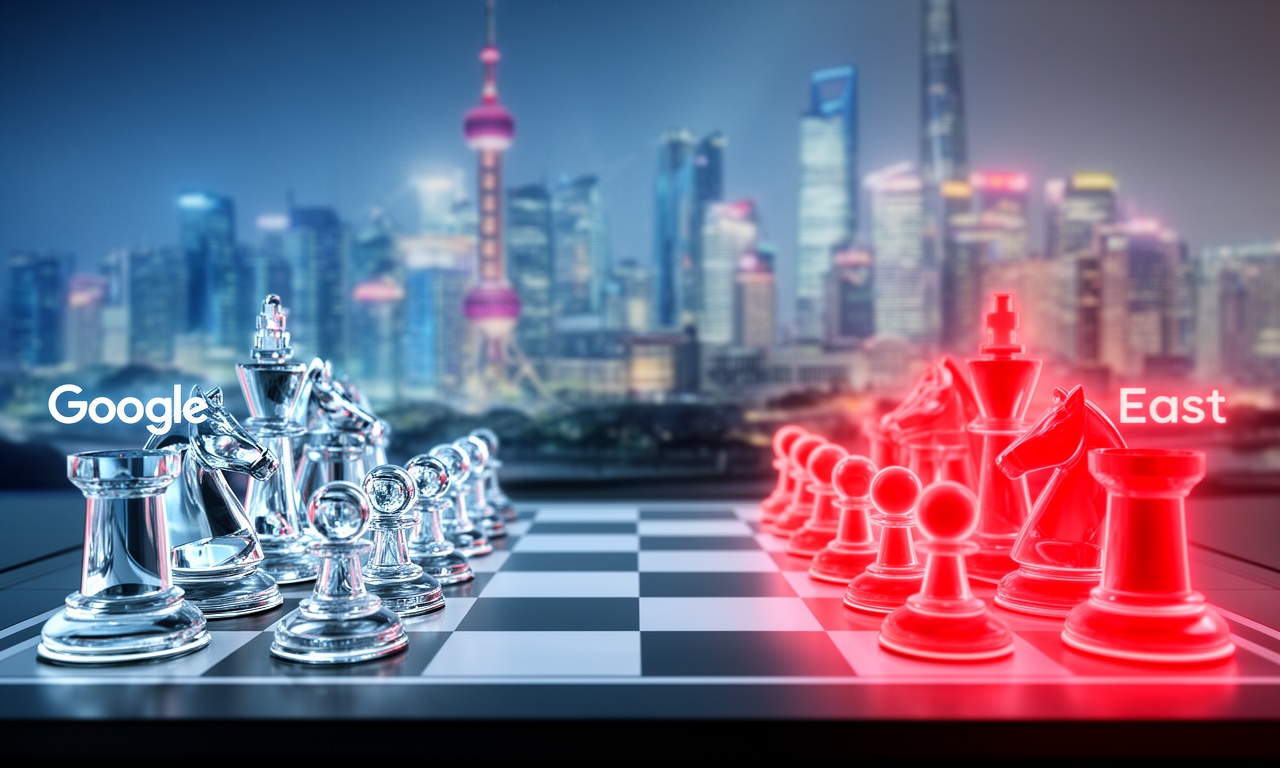
This represents a fascinating East vs. West dynamic in AI development. While companies like Google and OpenAI focus on creating expansive, closed-source models, DeepSeek offers lower-cost, high-performance alternatives—essentially democratizing access to advanced AI capabilities. For developers prioritizing cost-effectiveness, DeepSeek-V3.2 competes directly with Gemini 3.
The outcome of this competition can potentially reshape global AI landscapes. With the West focusing on a Personal Intelligence ecosystem and the East leaning toward Utility AI, the implications are vast and can lead to geopolitical shifts in tech leadership.
Google’s Challenge: Consistency and Trust
As Google steps into this new landscape, it faces its own hurdles. The company has a history of abandoning promising projects (we still mourn the loss of Google Reader, right?). To succeed with Personal Intelligence, it must maintain focus on three key areas:
-
Consistency: The tech giant needs to ensure that Personal Intelligence remains stable and core to both Android and Workspace.
-
Trust: With personalized AI comes the responsibility of handling data safely. Google must place privacy at the forefront of its offerings. This isn’t just a footnote; it needs to be the product’s main selling point.
-
Enterprise Solutions: Seamless integration of this technology into Google Workspace is essential. Without sacrificing the strict security businesses demand, Google must bridge any gaps that exist.
Failing to stick to these principles could make room for more streamlined competitors like Apple or even a more focused player like OpenAI to outshine Google’s efforts.
The Road Ahead: Bubble or Breakthrough?
As we look to the future of AI, one big question looms—are we nearing Artificial General Intelligence (AGI)? While Gemini 3 exhibits incredible reasoning capabilities, Google DeepMind CEO Demis Hassabis recently warned that the AI investment landscape is on the cusp of becoming “bubble-like.” Startups’ soaring valuations are starting to seem detached from the tangible benefits they deliver.
What’s Google’s strategy amid all this uncertainty? The value of Gemini is rooted in its built-in functionality rather than speculative investments. Because it’s embedded in products millions use daily, its success is more about practical utility than hype. This unique approach places Google in a stronger position than companies reliant on external funding or buzzwords.
Why This Matters
The rollout of Google’s Personal Intelligence isn’t just a tech update—it’s a milestone in how we interact with machinery we’ve come to depend on. Think about how it can fundamentally change workplaces, reshape our reliance on technology, and what it means for our relationships with the devices around us.
By 2029, the landscape may be unrecognizable, especially for those accustomed to the traditional Microsoft Office experience. Google’s deep integration hints at a shift towards a lifestyle that prioritizes personalized assistance—and that’s both exciting and a little daunting. Are we ready to hand our digital lives over to an AI that knows us better than we know ourselves? Only time will tell, but one thing is certain: the era of truly personalized AI is more than a mere fantasy; it’s quickly becoming our reality.

